
AC Not Cooling? Orem Air Conditioning Repair & Diagnostic Service
Professional HVAC Service You Can Trust
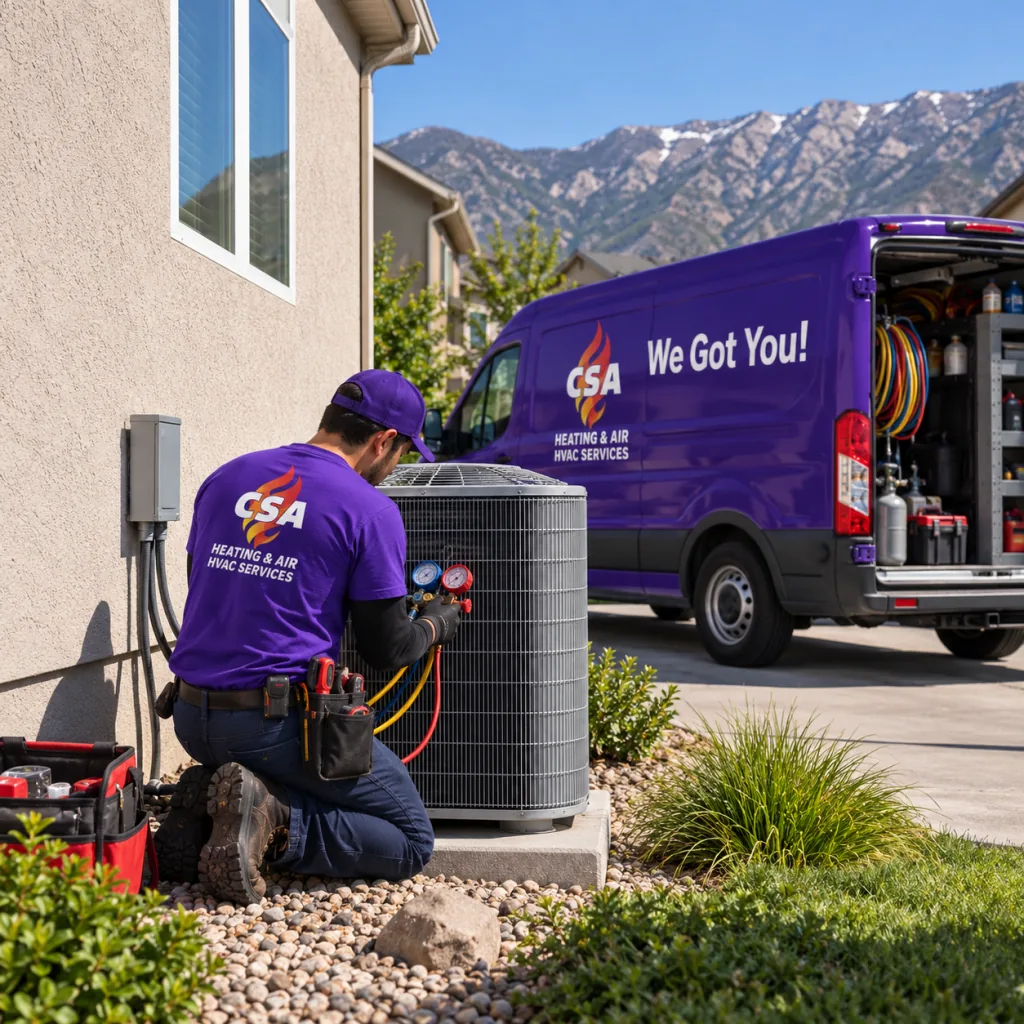
What’s Covered on This Page
- Section 1
- AC Not Cooling Repair Gets Your System Back to Full Strength
- AC Making Noise Repair Addresses Grinding, Banging, and Rattling Sounds
- AC Refrigerant Leak Repair Fixes Low Cooling Capacity at the Source
- AC Compressor Repair Restores the System’s Core Cooling Component
- AC Thermostat Repair Solves Inaccurate Temperature and Control Issues
- AC Capacitor and Electrical Repair Fixes Startup and Shutdown Failures
- AC Airflow and Duct Repair Resolves Weak or Uneven Cooling
- Ductless Mini-Split Repair Covers Non-Ducted Cooling System Issues
- Emergency AC Repair Provides Fast Response When Cooling Fails Suddenly
- AC Repair in Orem Covers Diagnosis for Older and Newer Home Systems Alike
- How do I know if my AC needs a repair call versus a simple fix I can do myself?
- Which AC problem should I call about first: noise, poor cooling, or a leak?
- Why does my Orem home’s AC suddenly stop cooling well every summer?
- Is it normal for an AC to run constantly without cooling the house?
- How do I choose between a repair and just calling for a full system check?
- Does living in an older Orem home or a basement apartment change what kind of AC repair I need?
Section 1
Most AC problems in Orem don’t creep up slowly. They show up during the first hot week of summer, after a unit has sat quiet since fall. At CSA Heating & Air, our Air conditioning repair service follows one rule: find the real cause before anything gets fixed or replaced. That rule runs through every service on this page.
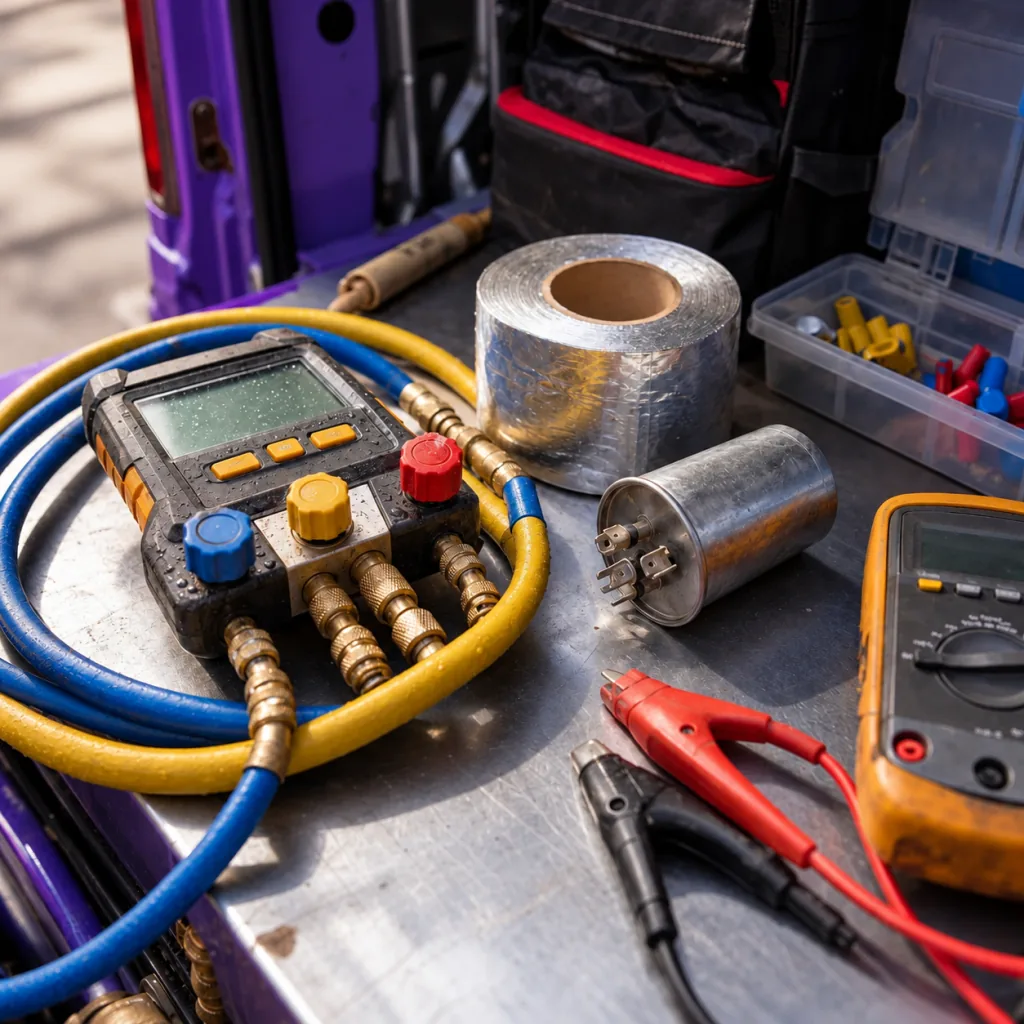
We’re an HVAC contractor. Through CSA HVAC Services, we handle maintenance, repairs, and system upgrades for existing units across Orem. We test, explain what we find, and let you decide.
Below are the AC repair problems homeowners in Orem run into, from a unit that runs but won’t cool to a mini-split that quits in a basement apartment. Each one has its own signs and its own fix. Find the one that sounds like your problem, then click through for the details.
If none of them quite fits, give us a call and we’ll help you figure out where to start.
AC Not Cooling Repair Gets Your System Back to Full Strength
It’s late afternoon in July. The AC is running, air is coming out of the vents, and the house is still 82 degrees. That’s an AC not cooling problem. It’s frustrating because everything looks like it’s working.
Here’s the catch. Air moving doesn’t mean the system is cooling. Your AC can push air all day while the parts that pull heat out of your home aren’t doing their job.
In Orem, this tends to show up with the first long heat wave. Your unit sat idle from fall through spring. Then it’s suddenly asked to run hard for hours at a time. Parts that were just getting by last September often give out under that first big load.
AC not cooling repair starts with a diagnostic check, not a guess. A tech looks at the likely causes in order: refrigerant levels, the compressor, the coils, the filter, and anything blocking airflow. Some of those are quick fixes. Others need a bigger repair. We don’t know which until we test, and we don’t recommend anything until we do.
That said, the filter is worth checking yourself before you call. If it’s clean and the house still won’t cool, it’s time for a tech. Our Air conditioning repair service page walks through what a full not-cooling diagnosis covers.
AC Making Noise Repair Addresses Grinding, Banging, and Rattling Sounds
Is that new sound coming from your AC a big deal? Sometimes it’s not. Sometimes it’s an early warning. The kind of sound usually tells a tech where to look first.
Here’s what common AC noises often point to:
- Grinding: worn bearings in the fan motor
- Banging or clanking: a loose or broken part, like a fan blade or motor mount
- Rattling: loose panels, screws, or debris like twigs inside the outdoor unit
- Squealing: wear in the indoor blower motor or its parts
AC making noise repair is mechanical work. It deals with motors, fans, mounts, and loose hardware. That’s different from AC refrigerant leak repair, which deals with the gas that carries heat out of your home. A hissing or bubbling sound can mean a leak, and that sends the job down a different path.
A tech finds the source, tells you what it is, and explains your options. A loose panel takes minutes. A worn motor takes more work, but catching it early beats waiting for it to seize.
Our advice: if you hear grinding or banging, turn the system off until someone looks at it. Running it can turn a small fix into a big one. Learn more on our Air conditioning repair service page.
Not sure what your Air conditioning repair service project needs? Ask us.
Request a Bid. CSA Heating & Air is ready to help.
AC Refrigerant Leak Repair Fixes Low Cooling Capacity at the Source
Refrigerant isn’t fuel. Your AC doesn’t burn through it or use it up over time. It moves in a closed loop, carrying heat from inside your home to the outdoor unit, over and over.
So if someone told you your AC is low on refrigerant, that tells you something important. It got out somewhere. A sealed system only loses refrigerant when there’s a leak.
That’s why AC refrigerant leak repair is different from a simple recharge. A recharge adds refrigerant back in. AC refrigerant leak repair finds where it’s escaping and seals it. Without that step, the new refrigerant leaks out too, and you’re back to warm air in a few weeks or months.
Common leak spots include the coils, the line set running between the indoor and outdoor units, and fittings that have loosened over years of heating and cooling. A tech uses leak detection tools to pin down the spot, repairs it, and then charges the system to the right level.
In our view, topping off without looking for the leak isn’t a repair. It’s a delay.
Signs of a leak include ice on the refrigerant lines, a hissing sound, and cooling that fades a little more each week. See our Air conditioning repair service page for how leak detection works.
AC Compressor Repair Restores the System’s Core Cooling Component
AC not cooling repair looks at the whole system. AC compressor repair zooms in on one part, the compressor, which is the pump that pushes refrigerant through the loop. Without it working right, nothing else in the system can cool your home.
Compressor trouble tends to look one of two ways. The unit runs nonstop and barely cools. Or the outdoor unit won’t start at all. Both can feel like a major failure.
But they don’t always mean the compressor is the problem. A bad capacitor, a failed contactor, or a wiring fault can look a lot like a dead compressor from the outside. Those are much smaller repairs. That’s why AC compressor repair starts by ruling out the simpler electrical causes first.
If the compressor really is the issue, a tech checks whether it can be repaired or whether the problem is deeper. We’ll walk you through what we found and what each option means for your system. You make the call with real information in hand.
We’d rather spend extra time testing than recommend a big repair you didn’t need. Read more on our Air conditioning repair service page.
Think your compressor might be failing? Call CSA Heating & Air and we’ll test it before anyone talks about a fix.
AC Thermostat Repair Solves Inaccurate Temperature and Control Issues
You set the thermostat to 72. The screen says 72. The living room feels closer to 78. Or the AC won’t turn on at all, or it clicks on and off every few minutes.

Before anyone blames the AC unit, the thermostat needs a look. It’s the part that tells the whole system when to run and when to stop. If it’s giving bad signals, a perfectly good AC will act broken.
AC thermostat repair covers a few common problems. Wiring can loosen or corrode. The temperature sensor can drift out of calibration. A newer smart thermostat might not match an older system’s wiring. Even placement matters, since a thermostat in direct sun or near a heat source reads the wrong temperature.
We think the thermostat is the first thing worth ruling out, because it’s the simplest part to test. A tech checks the wiring, the readings, and the signal going to the unit. That tells us whether the problem lives in the thermostat or further down the line.
That step keeps you from replacing AC parts that were never the problem. More details are on our Air conditioning repair service page.
Need help with Air conditioning repair service?
Request a Bid. CSA Heating & Air is ready to help.
AC Capacitor and Electrical Repair Fixes Startup and Shutdown Failures
A capacitor is a small part that stores energy and gives your AC’s motors the jolt they need to start. When it weakens, the motors can’t get going. Heat is hard on capacitors, and Orem summers put them to work.
These are the signs that usually point to a capacitor or electrical problem:
- The outdoor unit hums but the fan doesn’t spin
- The unit clicks on, then shuts off a few seconds later
- The AC trips the breaker
- The system starts some days and not others
AC capacitor and electrical repair is different from AC compressor repair, even though the signs can look alike. A capacitor feeds the compressor and fan motors. When it fails, the compressor can seem dead when it’s fine. Testing the capacitor, contactor, and wiring first often solves the problem with a much smaller repair.
Please don’t open the panel yourself. Capacitors can hold a charge even with the power off, and that’s a real safety risk.
A quick electrical check usually gets to the answer fast. Learn more on our Air conditioning repair service page.
AC Airflow and Duct Repair Resolves Weak or Uneven Cooling
Plenty of older Orem homes have grown over the years. A finished basement here, a bedroom addition there, a garage turned into a family room. When those spaces were added, the ductwork was sometimes stretched to reach them without matching how the system was first designed to move air.
The result is a house where the kitchen is cool and the back bedroom stays warm. The AC unit itself might be working fine. The air just isn’t getting where it needs to go.
AC airflow and duct repair looks at the path the cool air takes. A tech checks for crushed or disconnected ducts, leaks at the joints, closed or blocked vents, and a blower that isn’t moving enough air. Ducts in attics and crawl spaces can come loose and dump cool air where nobody feels it.
This is different from ductless mini-split repair. AC airflow and duct repair is about central systems that push air through ducts. Mini-splits don’t use ducts at all.
Uneven cooling doesn’t always mean you need a bigger system. Often it means the air needs a better path. See our Air conditioning repair service page for what an airflow check covers.
Ductless Mini-Split Repair Covers Non-Ducted Cooling System Issues
Central AC moves cool air through ducts. A ductless mini-split doesn’t. It uses an indoor air handler mounted on the wall, an outdoor compressor, and a line set running between them. That setup needs its own kind of repair know-how.
Mini-splits are common in spaces that can’t easily tie into a home’s existing ductwork. In Orem, that includes a growing number of accessory apartments and secondary living units, plus additions and converted garages. When the mini-split stops cooling, that space usually has no backup.
Ductless mini-split repair covers problems like an indoor unit that blows warm air, water dripping from the wall unit, error codes on the display, a remote that no longer controls the system, and refrigerant leaks along the line set. Dirty filters and coils inside the indoor head are common too, since they’re easy to forget.
We install ductless mini-splits in new construction and renovation projects, so we know how they’re put together from the start. That helps when it’s time to take one apart and find what’s wrong.
If you own a rental unit or ADU, a quick fix matters for your tenant too. Learn more on our Air conditioning repair service page.
Have questions? We’re happy to help.
Request a Bid. CSA Heating & Air is ready to help.
Emergency AC Repair Provides Fast Response When Cooling Fails Suddenly
The AC quits on a 97-degree afternoon. No warning sounds, no slow decline. Just silence and a house getting warmer by the hour.
Emergency AC repair is for that moment. It’s different from routine repair, where a weak or noisy system can wait a day or two. A full failure in serious heat is a health issue, not just a comfort issue, especially for babies, older adults, and anyone with a heat-sensitive health condition.
When you call, tell us who’s in the home. That helps us understand how urgent it is, and we’ll be straight with you about when a tech can get there. While you wait, a few steps help:
- Turn the system off if it smells burnt or is making loud noises
- Close blinds and curtains on sunny windows
- Move to the lowest level of the home, like a basement, where it stays cooler
- Drink water and keep an eye on anyone sensitive to heat
Once a tech arrives, the job still starts with finding the cause. Fast doesn’t mean guessing. Read more on our Air conditioning repair service page.
AC Repair in Orem Covers Diagnosis for Older and Newer Home Systems Alike
Not sure which of these problems you have? That’s normal. Most people don’t call because they know what’s broken. They call because something feels off.
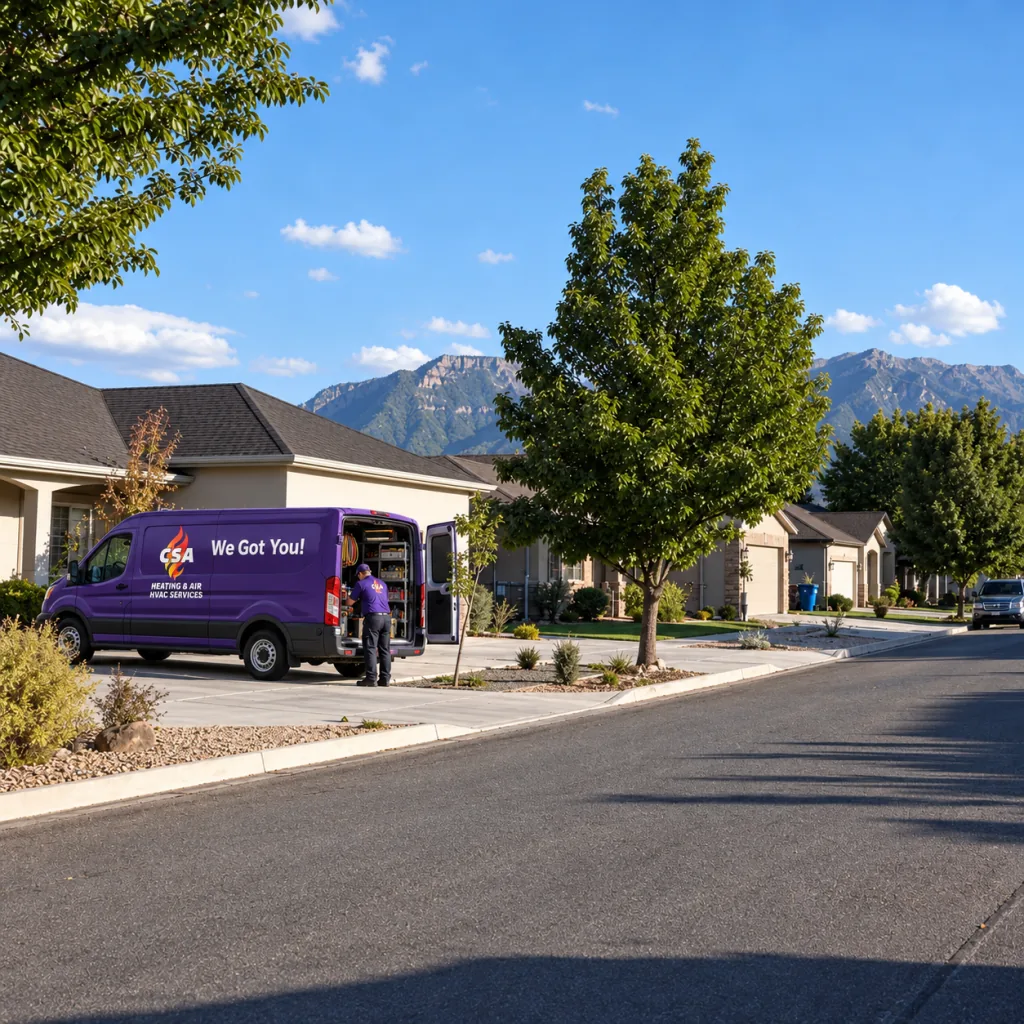
Orem’s homes make this a real question. Utah County Assessor records show that about 53% of Orem homes with a recorded build year were built before 1980. Many of those have had systems swapped, ducts extended, or spaces added over the decades. Newer homes bring their own issues, since the quality of the original install shapes how a system holds up.
That mix means the same symptom can have different causes from one house to the next. Warm air in a 1960s home might trace back to old ductwork. In a newer home, it might be a refrigerant charge that was never quite right.
AC repair in Orem starts with a full diagnostic visit. A tech checks the thermostat, electrical parts, refrigerant, airflow, and the outdoor unit. Then we tell you what we found, what we’d fix, and why. No repair happens until you understand it.
That’s the whole idea behind this page. Find the cause first, then fix the right thing. Our Air conditioning repair service page explains what a diagnostic visit includes.
Call us today and we’ll find out what’s really going on with your AC before we fix a thing.
Frequently Asked Questions
Common questions about Air conditioning repair service
How do I know if my AC needs a repair call versus a simple fix I can do myself?
Check your filter first. If it’s clean and the house still won’t cool, call a tech. In Orem, most AC trouble shows up during the first long heat wave after the unit sits idle all winter. Grinding or banging sounds mean you should shut the system off and get it looked at before running it more.
Which AC problem should I call about first: noise, poor cooling, or a leak?
Call about whichever one you’re noticing, since each points to a different cause. Air blowing but no cooling often means refrigerant or compressor trouble. Grinding or rattling points to a mechanical issue like a motor or loose part. Hissing or ice on the lines usually means a refrigerant leak, which needs its own fix.
Why does my Orem home’s AC suddenly stop cooling well every summer?
Your system sits unused from fall through spring, then gets pushed hard during Orem’s first real heat wave. Parts that were barely holding on last September often fail under that sudden load. A diagnostic check finds the actual cause instead of guessing, so you’re not replacing parts that didn’t need it.
Is it normal for an AC to run constantly without cooling the house?
No, that usually points to a bigger issue like a refrigerant leak or compressor problem. Air moving through your vents doesn’t mean the system is pulling heat out of your home. If your AC runs nonstop and the house stays warm, it needs a diagnostic check, not just a thermostat adjustment.
How do I choose between a repair and just calling for a full system check?
Start with a diagnostic check if you’re not sure what’s wrong. A tech tests refrigerant levels, the compressor, coils, and airflow in order, then tells you what’s causing the problem. That way you only pay for the repair you need, not a guess based on symptoms alone.
Does living in an older Orem home or a basement apartment change what kind of AC repair I need?
It can, especially with mini-split systems common in basement apartments and additions. These units have their own set of failure points separate from a central AC. If yours quits in a lower-level space, mention that when you call so the tech brings the right tools for that setup.

Request a Bid
Tell us about your project and our team will get back to you.